
How to Get Started in Live Sound Engineering
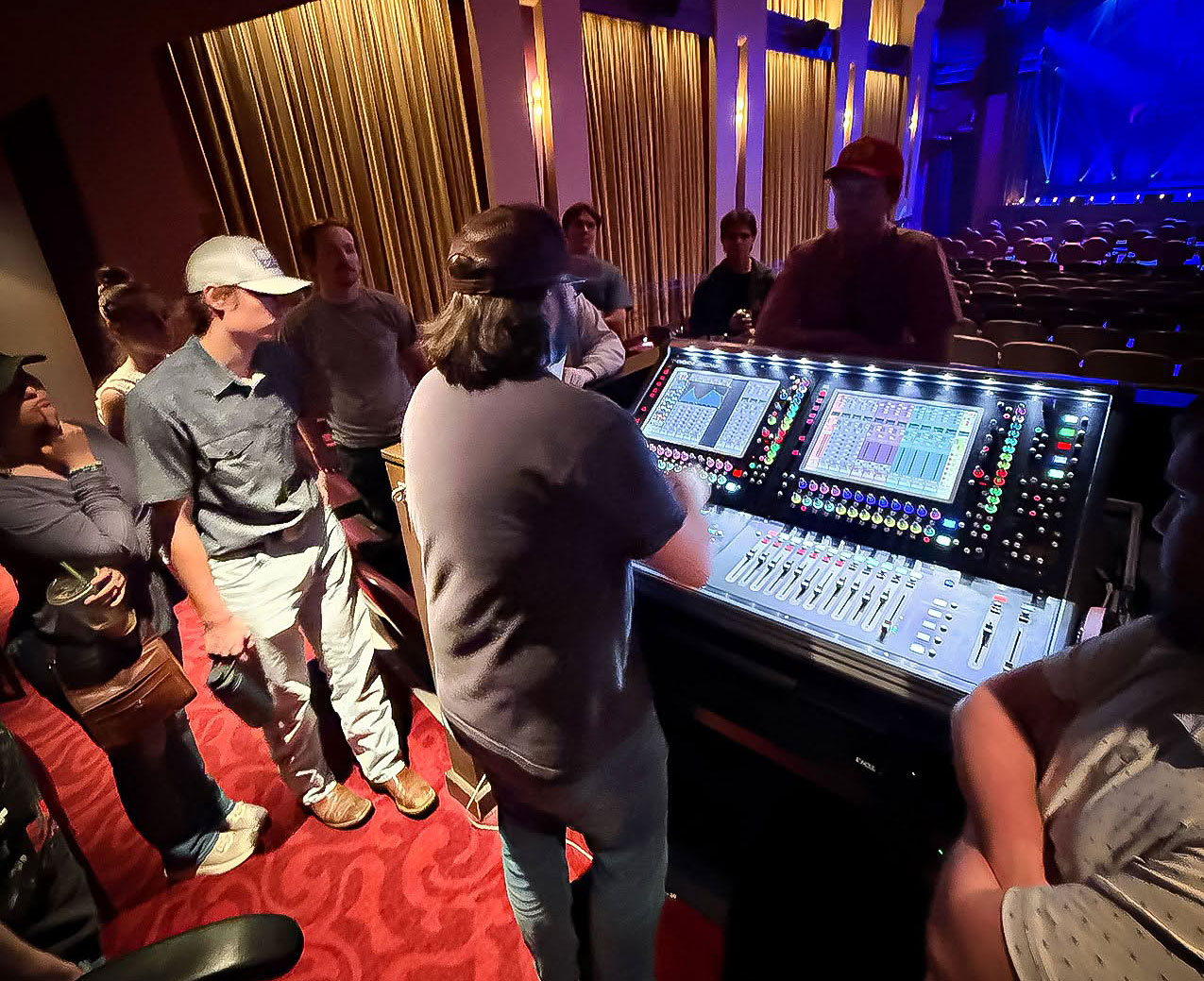
A live sound engineer runs the audio for live performances—setting up the PA system, mixing the show, and solving problems in real time. To become one, build core audio skills (signal flow, gain staging, EQ, and mixing), get hands-on experience at local venues, churches, and theaters, learn the industry-standard gear, and consider formal training to accelerate your path.
It’s one of the most exciting experiences you’ll ever have. You’re packed into an arena waiting to see one of your favorite bands, maybe for the very first time. You’re surrounded by thousands of fans who love the same music you do, and the energy in the room is electric. Suddenly the lights go down. The silhouettes walk onto the stage. Then… BOOM. The first downbeat hits.
The drums thunder through the room. The bass shakes your chest. The guitars roar to life, and a crystal-clear vocal floats perfectly above it all. For most people, that’s where the story begins.
But for a handful of us, that’s when we start wondering, Who’s making all of this sound so good?
The answer is the live sound engineer.
Live sound engineers are often the most important link in a successful concert. (And yes… that’s exactly why band members should always be nice to them.) They combine technical knowledge, quick decision-making, and great communication skills to create an unforgettable experience for both the artists and the audience.
If you’ve ever wondered what it takes to build a career in live sound—and how to become a live sound engineer yourself—you’re in the right place.
WHAT DOES A LIVE SOUND ENGINEER ACTUALLY DO?
A live sound engineer is the person responsible for everything the audience hears at a live performance. A lot of people think this job is just pushing faders on a mixer and trying to get the best mix possible. It goes much deeper than that.
Especially when you’re starting out, a typical day might include setting up the PA system hours before anyone arrives, running cables, positioning microphones, building monitor mixes, working directly with artists, troubleshooting problems in seconds, mixing the show, and then tearing everything down after the audience has gone home.
Sound like a lot of work? You’re right… it is.
A live sound engineer can easily spend eight or more hours working on a 90-minute performance. But here’s the thing: it’s incredibly rewarding. When the band walks off stage smiling, the audience has an amazing experience, and everything went smoothly, there’s a tremendous sense of pride that comes from knowing you helped make it happen. That’s the feeling live sound engineers chase, and it’s worth every bit of the hard work.
FOH vs. Monitor Engineer: Two Ways In
As you explore the field, you’ll hear two job titles come up a lot: the front-of-house (FOH) engineer and the monitor engineer. The front-of-house engineer mixes the sound the audience hears, working from a console out in the crowd. The monitor engineer mixes what the performers hear on stage through wedges or in-ear monitors, making sure each musician can hear exactly what they need.
On smaller gigs, one person often does both jobs. On larger tours, they’re separate roles—and both are excellent ways to break into the industry.
SKILLS EVERY BEGINNER LIVE SOUND ENGINEER SHOULD DEVELOP
Like any profession, you have to develop the technical skills to do the job well. There’s no faking your way through live audio.
You’ll need to understand signal flow, gain staging, EQ, compression, microphone selection and placement, wireless systems, and how today’s digital consoles operate. These are the building blocks of every great engineer.
But technical knowledge is only part of the equation.
Live sound is a constantly changing environment. Every performance is different, and unexpected problems are part of the job. Successful engineers learn to stay calm under pressure, communicate clearly, stay organized, and manage their time well.
If organization or stressful situations don’t come naturally to you, don’t let that discourage you. These are skills that can be developed with experience. The more shows you work, the more confident you’ll become.
HOW TO GET STARTED IN LIVE SOUND: START SMALL AND GET HANDS-ON
You don’t become a live sound engineer by watching YouTube. You become one by mixing real shows.
So how do you get behind the console?
Start small. Really small if you have to.
The good news is that opportunities are everywhere if you’re willing to look. Churches, community theaters, school productions, local music venues, and bands in your hometown all need audio engineers.
Introduce yourself to the people running sound. Volunteer. Offer to help load in, wrap cables, set up microphones, or tear down after the show. Tell the house engineer you’re eager to learn and ask if you can observe while they work.
You’ll be surprised how many experienced engineers are willing to help someone who’s genuinely interested and willing to work hard.
The bottom line is that experience matters far more than reading manuals.
That’s one of the reasons we emphasize hands-on learning at Dark Horse Institute. Our Audio Engineering students are working on professional equipment from the very beginning under the guidance of experienced mentors who have spent years in the industry.
LEARN THE GEAR YOU’LL ACTUALLY USE
It’s also important to become familiar with the equipment you’ll encounter on real-world gigs.
Digital consoles from companies like Yamaha, Behringer, Avid, Allen & Heath, and DiGiCo are common throughout the industry. Every console has its own workflow, but the core concepts remain the same.
You should also become familiar with microphones like the Shure SM57, SM58, and Sennheiser MD421. Learn what each microphone does well and why one might be chosen over another.
Beyond that, understand stage snakes, digital stage boxes, wireless systems, in-ear monitors, direct boxes, and PA systems. The more comfortable you become with the equipment, the more valuable you’ll be on any production team.
UNDERSTAND THAT EVERY VENUE IS DIFFERENT
One of the biggest surprises for beginners is realizing that no two venues are alike.
Running sound in a coffee shop is completely different from mixing an outdoor festival or a packed arena. Room acoustics, crowd absorption, stage volume, weather, and even the shape of the room all affect your mix.
Learning to adapt to different environments is one of the skills that separates experienced engineers from beginners.
DO YOU NEED A DEGREE TO BECOME A LIVE SOUND ENGINEER?
No—you don’t need a college degree to become a live sound engineer. There’s no license or specific diploma legally required to run sound. Plenty of working engineers are largely self-taught or learned on the job. What ultimately gets you hired is your skill behind the console and your reputation for being reliable.
That said, structured training can make a real difference. A focused program or certificate gives you organized instruction, mentorship, and—maybe most importantly—hands-on time on professional gear that can be hard to access on your own. It’s the difference between piecing the craft together over years and building solid fundamentals in a fraction of the time.
HOW LONG DOES IT TAKE TO BECOME A LIVE SOUND ENGINEER?
It depends on your path, but most people can begin working entry-level gigs within a few months of consistent hands-on practice, while building the experience to mix professionally typically takes one to three years. You can start volunteering at a local venue or church this week—there’s no waiting period to begin learning.
The self-taught route can take longer simply because opportunities are inconsistent; you’re dependent on when someone lets you behind the console. A dedicated program compresses that timeline by putting you on real equipment from day one, so you’re not waiting around for your next chance to practice.
HOW MUCH DO LIVE SOUND ENGINEERS MAKE?
Pay varies widely by experience, location, and whether you tour. Entry-level live sound work often starts around $19 per hour (roughly $40,000 per year), and the majority of live sound engineers earn somewhere between about $32,500 and $51,500 annually. The broader category of sound engineering technicians has a median salary of about $66,430 per year, according to the U.S. Bureau of Labor Statistics (May 2024).
At the top end, experienced touring engineers and system techs for major artists can earn well into six figures. Many live sound engineers also work freelance or per-gig, which means income scales with your reputation, your reliability, and how much you’re willing to travel. Like most creative-industry careers, the range is wide—and the engineers who stay in demand are the ones people trust to deliver a great show every night.
BUILD YOUR NETWORK ALONG WITH YOUR SKILLS
If you’ve read any of my previous blogs, you know I’m always talking about networking. Well, the same principles apply here.
The live production world is surprisingly small, and your reputation travels fast.
Be dependable. Show up early. Stay late when needed. Help with load-in and load-out. Stay humble. Be the kind of person people enjoy working with.
It sounds simple because it is.
Be kind. Work hard. Help people whenever you can.
Those qualities get remembered long after people forget what console you mixed on.
A Personal Story
I play guitar at a large church in Nashville. A typical weekend includes a Saturday night service and a Sunday morning service. After Saturday night, the entire stage is struck, which means everything has to be rebuilt before Sunday morning.
I’m usually at the venue at least 30 minutes early so I have time to get my pedalboard set up and make sure everything is ready to go.
Well… on one particular Sunday, I was the guy running late.
A series of unexpected events had me pulling into the parking lot barely in time for downbeat. The entire drive was stressful because I knew I still had to get everything connected before we started.
When I walked (okay… ran) onto the stage, my stress level instantly dropped.
Our audio engineer greeted me, asked if everything was okay since he knew I was never late, and then said something I’ll never forget.
“I went ahead and got everything ready for you.”
My pedalboard was in place. Everything was powered on. My in-ear pack was waiting for me. Even my guitar cable had been perfectly coiled beside my board. All I had to do was plug in and play.
Wow. He didn’t have to do any of that. But he did.
To this day, he’s one of my favorite audio engineers—not because he’s technically gifted (although he absolutely is), but because he genuinely cared enough to help someone else.
Go the extra mile. People remember that. More importantly, they refer people like that.
In live production, your reputation often gets you your next gig before your résumé does.
CAREER OPPORTUNITIES IN LIVE SOUND
One of the great things about learning live sound is that there isn’t just one career path.
Many engineers dream of touring with major artists, but there are countless other opportunities. Churches, theaters, corporate events, music venues, festivals, production companies, convention centers, cruise ships, and broadcast productions all rely on skilled audio professionals.
As your experience grows, so do your opportunities. (If you want to see how live sound fits alongside studio, mixing, and broadcast work, check out our complete guide to sound engineer career paths.)
WHY PROFESSIONAL TRAINING CAN ACCELERATE YOUR CAREER
Can you learn all of this on your own?
Absolutely.
But it often takes years because opportunities can be inconsistent.
That’s where professional training can make a huge difference.
At Dark Horse Institute, students don’t spend months simply reading about audio concepts. They gain hands-on experience from day one, learning signal flow, microphone techniques, console operation, and live production from engineers who are actively working in the industry.
Instead of waiting for someone to give you a chance, you’ll build confidence on professional equipment while learning from mentors who have already built successful careers.
Ready to take the next step? Visit DarkHorseInstitute.com to request info, connect with an Admissions Advisor, or RSVP for an Open House and experience the campus for yourself.
FREQUENTLY ASKED QUESTIONS
What does a live sound engineer do?
A live sound engineer sets up and operates the audio for live performances. That includes assembling the PA system, placing microphones, building monitor mixes for the performers, mixing the show for the audience, and troubleshooting any problems in real time so the event sounds great from start to finish.
Do you need a degree to be a live sound engineer?
No. There’s no required degree or license to work in live sound—skill and reputation matter most. Many engineers are self-taught. However, a focused training program or certificate can shorten the learning curve significantly by providing mentorship and hands-on time on professional equipment.
How do I get experience with no connections?
Start local and volunteer. Churches, community theaters, school productions, and small music venues almost always need help. Offer to load in gear, wrap cables, and set up mics, then ask to observe the house engineer. Showing up reliable and eager is often all it takes to get behind the console.
What’s the difference between a live sound engineer and a studio engineer?
A live sound engineer mixes performances in real time, with no chance for a second take, so quick decisions matter. A studio engineer records and mixes in a controlled environment where takes can be repeated and edited. The core audio skills overlap, but the pace and pressure are very different.
What gear should a beginner learn first?
Focus on the fundamentals: signal flow and gain staging, a common digital console (Yamaha, Behringer, Avid, or Allen & Heath), and workhorse microphones like the Shure SM57 and SM58. From there, learn PA systems, stage boxes, wireless systems, and in-ear monitors—the gear you’ll see on nearly every gig.
Is live sound engineering a good career?
It can be a rewarding career for people who love music and thrive under pressure. Pay ranges widely—from around $40,000 for entry-level roles to six figures for experienced touring engineers—and opportunities exist across concerts, theaters, corporate events, houses of worship, and more. Reliability and reputation drive long-term success.
FINAL THOUGHTS
Every experienced live sound engineer started exactly where you are now—curious, excited, and eager to learn.
The best way to get started is to gain hands-on experience, keep asking questions, and learn from people who have spent years behind the console.
Whether your dream is touring with artists, mixing festivals, running sound at your favorite venue, or simply being part of creating unforgettable live experiences, the journey begins by saying yes to your first opportunity.
If you’re ready to turn your passion for live sound into professional skills, Dark Horse Institute’s Audio Engineering program offers hands-on training, industry mentorship, and real-world experience that can help prepare you for a career in live audio.
Leave a Reply