
5 Essential Tips For Recording Vocals
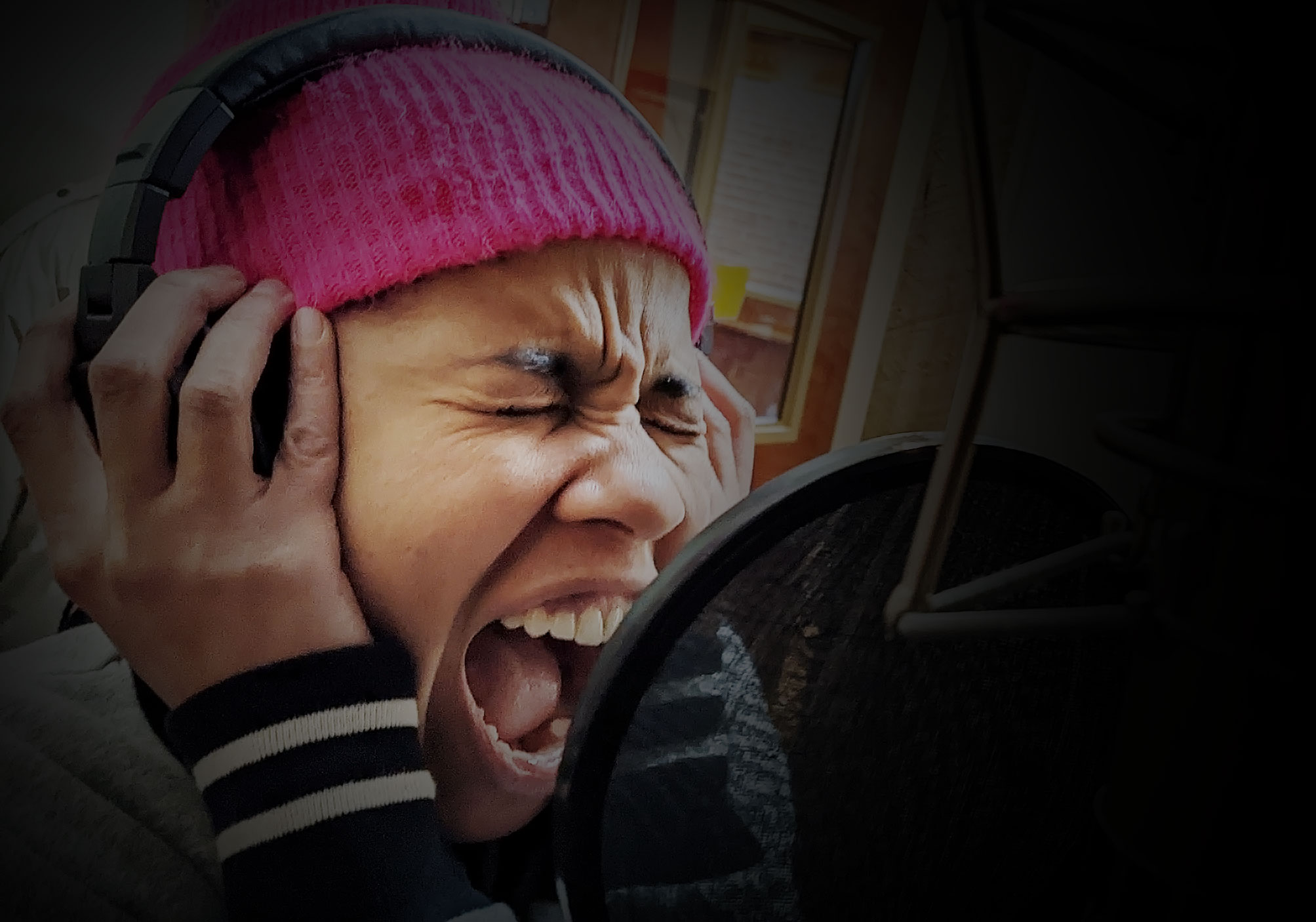
Vocals are arguably the most essential part of any mix. They define melody and lyrics, and most listeners focus on them because they serve as the vehicle for conveying the artist’s message.
To achieve the best possible vocal recordings, it’s essential to take extra care in your approach. Whether you’re in a renowned studio or a home setup in a bedroom corner, applying key principles can greatly enhance the quality of your recordings. Paying attention to these details will help you capture the best vocal performance.
One individual with extensive experience in recording vocals is our own Dave Hagen. Dave is a Grammy-winning producer and engineer who has been with Dark Horse for over a decade. He has been writing and teaching the Audio Engineering curriculum since the inception of DHI, while also serving as the head engineer at our studio.
Dave began his career working on records with rock artists like Relient K. He has since collaborated with a wide range of artists across the industry, including Keb’ Mo’, OneRepublic, Carrie Underwood, RED, Reba McEntire, Foghat, Chris Tomlin, Ashley Judd, and many others.
We asked Dave to reflect on his years of experience and provide us with five essential tips for recording vocals. Here’s his response.
1. Choose Your Equipment Wisely for Recording Vocals
If you have the opportunity to audition multiple microphones, like condenser microphones, dynamic microphones or tube microphones, it’s definitely worth your time! Sometimes, the most expensive microphone does not complement a vocalist or match the vibe of a song.
In many cases, an SM57—a relatively inexpensive mic—can feel better than pricier options, especially low-quality condenser mics. Dynamic mics are typically less expensive, more resistant to feedback, and can produce excellent results in home studio settings.
When auditioning microphones, be sure to listen in solo for any subtle distortions or unwanted reflections, but also evaluate how they sound within the context of the song with compression and effects applied. Remember, the audience will never hear the isolated version, so it’s crucial to prioritize achieving the right feel within the mix.
Additionally, when comparing mics, ensure that the levels are matched as closely as possible; otherwise, you may be misled into preferring the louder microphone. Ribbon mics, with their figure-8 polar pattern and smooth sound profile, offer unique characteristics but require careful handling due to their fragility.
The preamp is the next most important component. If you only have a basic audio interface, there’s no need to worry. However, if you have the chance to experiment with different preamps in the studio, you might discover a magical combination that enhances your performance. Clean preamps, such as a API 312 or a MagicPre, will provide you with a lot of dynamics and nuance.
On the other hand, transformers in a Neve-style preamp will boost the mid-range and give an overall louder feel. Tube-based preamps like the TL Audio Dual Valve Mic Pre or the ART Pro MPAII (or even the Telefunken v76, if your budget allows) will add warmth to your performance, creating a vintage vibe, but they may sacrifice some airiness and dynamics.
2. Eliminate Distractions and Unwanted Noise
Vibe is everything! Prepare your space and day to reduce stress and clear your mind. Dim the lights or open the curtains—whatever creates the atmosphere you’re comfortable with!
To ensure clear and clean sound, it’s important to address sound reflections and room resonances. Early reflections are sounds that bounce off nearby walls and windows, which can make vocal sounds harsh or unclear. Many mic shields claim to block these reflections but remember that since the microphone is pointed toward the singer, a shield behind the mic doesn’t help much.
A much more effective solution is to hang heavy-packing blankets behind and around the singer. Additionally, proper acoustic treatment is crucial for minimizing reflections and echoes, enhancing the overall sound quality of your recordings.
You can also quickly build a portable vocal booth using PVC pipes and fittings from a home improvement store. Another important factor is the placement within your room. While a closet may reduce reflections, it can introduce strange resonances in lower frequencies. It’s a good idea to record a verse and chorus of your song in a few different locations to compare the sound. These resonances may cause certain notes to sound louder or thinner, so be attentive to any tonal changes as the melody shifts.
Another common issue you might face is plosives—these are bursts of air from the Ps and Bs that hit the mic capsule when you sing directly into the microphone. The first solution is simple: move the mic slightly above the path of the pressure wave. Typically, a vocal mic sounds great an inch or two above the singer’s mouth if angled down slightly, allowing most of the pop to avoid the capsule. The second solution is to use a pop filter to break up the pressure wave. There are many options available.
3. Pay Attention to Your Headphone Mix and Pop Filter
As a singer, it’s essential to have a good balance between hearing yourself and the music. If you can’t hear yourself clearly, you may over-sing, risking vocal strain and sharp notes. Conversely, if your own voice is too loud in your headphones, you might tend to sing flat. Many singers find it helpful to remove one ear of their headphones to better hear their voice in the room, as this environment is where they feel most comfortable and can accurately gauge their pitch.
Consider applying a small amount of compression to your vocal track, knowing that you can always increase it later if necessary. This dynamic range compression can help maintain a consistent volume between your verses and choruses, especially since you may sing at different volumes. However, be cautious with the amount of compression you use, as too much can lead you to over-sing, particularly on your stronger notes.
Latency is another significant concern. If you’re tracking through plugins, you’ll notice a slight delay that can affect your ability to sing in tune and stay in time. To minimize latency, ensure that the buffer setting on your Digital Audio Workstation (DAW) is as low as possible.
Additionally, make sure you’re singing along with a high-quality track. If you want to deliver an emotional performance, choose the most inspiring and energetic version of the music available to you. You might also want to apply a slight EQ cut in the areas where you need to hear yourself clearly. A small reduction around 600 Hz and 1 kHz can create space for you to monitor your pitch and inflection without having to turn down the music.
4. Be Patient
It’s important to dedicate some time to this process. Remember that a recording session is not about proving you can sing flawlessly from start to finish. If you aim for perfection, you may restrict your performance and hinder your expressiveness. Some of the best moments often occur in the most unpredictable takes. If you’re not making mistakes, you might be playing it too safe.
During rehearsal, focus primarily on pitch, timing, finding the best phrasing for each lyric, and perfecting your tone. When it comes to the session, hopefully, you can rely on muscle memory for those elements and concentrate on convincingly telling the story. If you’re working quickly, consider breaking your takes down by sections, repeating a verse until you’ve developed your approach and nailed the delivery. Remember to take breaks and protect your voice.
5. Comp With The Story In Mind
“Comping” is the process of compiling all the best moments from each take to assemble the final performance heard on the record. And comping a vocal is a crucial step in creating the final performance. To streamline your process, watch some tutorial videos specific to your Digital Audio Workstation (DAW) so you don’t become overwhelmed.
Before selecting takes, it’s helpful to do a bit of vocal mixing to give a better sense of the final product. Applying some compression, EQ, and reverb can really enhance your decision-making, allowing you to focus on the emotional impact rather than just addressing the singer’s insecurities.
When you start comping, there are several aspects to consider: tone, timing, pitch, diction, intensity, volume, vibrato, believability, and any extraneous noises. Remember that some of these elements can be corrected or improved during the editing and mixing process, while others cannot. Volume and pitch (within certain limits) can be easily adjusted. Tone can be shaped with EQ, but the natural texture of a voice is not changeable.
If you notice that later takes lack detail as the singer’s voice becomes fatigued, it might be better to use an earlier take. However, keep in mind that the feature that truly makes a song connect with listeners is rarely perfect tone.
The emotional connection between the singer and the story being told is the most important element. When I comp, my first priority is to determine, “Which of these takes do I believe?”. Only after that do I focus on which ones sound the best. This approach results in a much stronger song and deeper connection to the audience than simply choosing the most in-tune takes.
Additionally, pay attention to dynamics. The loudest and clearest vocal often seems the best compared to other takes at that moment, but if every line is delivered at maximum intensity, there’s no chance for surprise as the song unfolds. Including smaller, more intimate moments throughout can enhance the impact of the more powerful lines that follow. This creates a journey for the listener, much like the arc of a movie plot!
==============================
So there you have it: five essential tips for recording vocals in any situation. By applying these great insights from Dave, you’ll achieve better recordings in no time.
Are you serious about advancing your audio engineering skills? Consider the 20-week Audio Engineering program at Dark Horse Institute. You will learn directly from experienced instructors like Dave Hagen, who have a wealth of knowledge from working with renowned recording artists across various music genres.
These professionals have contributed to numerous Gold, Platinum, and Grammy®-nominated albums and will share their valuable tips, tricks, and tools of the trade with you firsthand. As a DHI audio engineering student, you’ll have the opportunity to record, mix, and master two EPs with professional working bands. You’ll enter the industry with confidence, armed with a strong portfolio of professional projects to showcase your skills.
If you are interested in a career in the Music Industry, explore our career training programs at Dark Horse Institute:
Audio Engineering School Nashville
Professional Songwriting Course in Nashville
Music Business Course Nashville
Our professional training programs are a great way to take things to the next level!
One Comment
This post is full of great tips and advice—thank you!