
5 Essential Skills For A Successful Music Business Career

Have you ever wondered what it really takes to succeed in the music industry?
Many people assume an artist’s success is entirely their own doing. But behind every chart-topping hit, viral sensation, and sold-out tour is a team of skilled music business professionals—managers, agents, concert promoters, A&R executives, marketing specialists, and legal advisors—who ensure everything runs smoothly.
From negotiating contracts and securing funding to handling publicity and coordinating logistics, the behind-the-scenes work is critical in turning an artist’s vision into a global phenomenon. It’s this carefully orchestrated collaboration that transforms raw talent into a polished, market-ready product that resonates with audiences worldwide.
At Dark Horse Institute, we know what it takes to make it in this fast-paced, billion-dollar industry. Whether you’re pursuing a music business career as a music manager, agent, marketer, or concert promoter, mastering the right skills is essential. That’s why we’ve identified five key skills every music business professional must have to thrive in today’s competitive music industry.
Introduction to the Music Industry
The music industry is a complex and multifaceted field that encompasses various sectors, including recording, live performance, and music publishing. It involves a wide range of professionals, from artists and musicians to managers, marketers, and entertainment accountants. This dynamic and ever-changing field is constantly evolving with new technologies, trends, and business models emerging regularly.
To succeed in the music industry, one needs to have a deep understanding of the business side of things, including financial accounting, marketing, and contractual agreements. This knowledge is crucial for navigating the industry’s complexities and ensuring long-term success. A music business/management program can provide students with the necessary skills and insights to pursue a successful career in this vibrant industry. By mastering the fundamentals of music business, students can position themselves for various roles, from managing artists to overseeing music publishing and beyond.
Key Roles in the Music Business
The music business is a collaborative ecosystem where various key roles contribute to the success of artists and music projects. Managers play a pivotal role in guiding an artist’s career, handling everything from contract negotiations to tour planning. Marketers are essential for crafting compelling campaigns that build an artist’s brand and engage fans across multiple platforms.
Entertainment accountants ensure that financial aspects are meticulously managed, from budgeting to royalty calculations. They play a crucial role in maintaining the financial health of both artists and music companies. Additionally, A&R (Artists and Repertoire) executives are responsible for scouting new talent and overseeing the development of artists, ensuring they reach their full potential.
Each of these roles is integral to the music industry’s functioning, and their collaborative efforts help transform raw talent into successful, market-ready products. Understanding the responsibilities and importance of these roles is essential for anyone looking to thrive in the music industry.
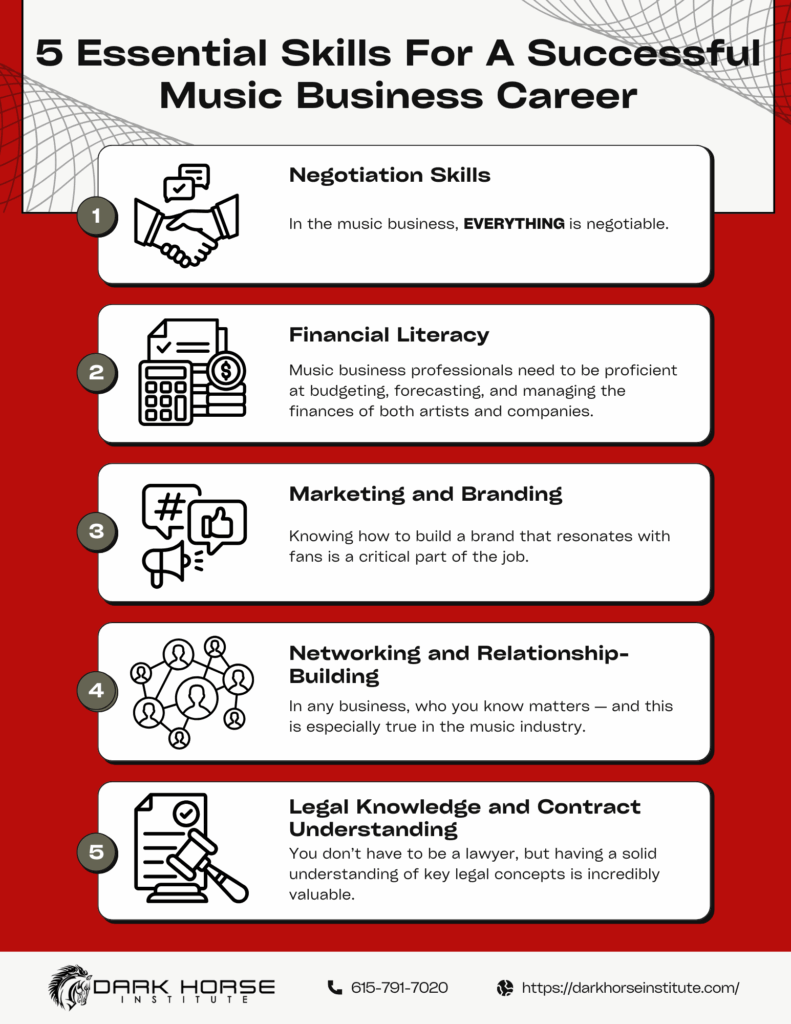
1. Negotiation Skills
In the music business, everything is negotiable, especially contractual agreements. From artist contracts and record deals to booking fees and endorsement opportunities, strong negotiation skills are essential. Whether you’re securing a partnership, booking a venue, or working out a publishing agreement, being able to effectively communicate and strike favorable terms is crucial. A skilled negotiator knows how to balance the needs of both parties, ensuring that both the artist and the business benefit from the deal. Developing this skill requires:
- Practice
- Patience
- The ability to stay calm under pressure
All of which are key components of a successful music business professional.
2. Financial Literacy
Understanding the financial side of the music industry is crucial. The business side of music can be complex, with multiple revenue streams such as:
- Royalties
- Licensing
- Touring income
- Merchandise sales
Music business professionals need to be proficient at budgeting, forecasting, and managing the finances of both artists and companies. Having a strong grasp of finance ensures that you’re not just helping artists succeed creatively but also keeping them financially stable in an ever-changing industry.
3. Marketing and Branding
Marketing and branding are essential to building and maintaining an artist’s public image. Today’s music industry thrives on social media, digital platforms, and content creation. As a music business professional, you must:
- Craft compelling marketing campaigns that drive engagement
- Be able to position an artist
- Leverage trends, influencer marketing, and digital ads
- Understand target demographics
This involves creating campaigns for radio, media, and social platforms, as well as coordinating and participating in photoshoots. Whether you’re managing an artist’s social media accounts, planning a major campaign, or coordinating interviews, knowing how to build a brand that resonates with fans is a critical part of the job.
4. Networking and Relationship-Building
In any business, who you know matters — and this is especially true in the music industry. Relationships are the cornerstone of success, from securing gigs to landing record deals to forging connections with other industry professionals. Networking is about more than just exchanging business cards; it’s about fostering genuine, long-term relationships that can provide opportunities and valuable insights. Whether you’re interacting with artists, producers, venues, or labels, strong interpersonal skills and a wide-reaching professional network are essential for advancing in the industry.
5. Legal Knowledge and Contract Understanding
The music industry is filled with complex legal considerations, often requiring the expertise of Entertainment Attorneys. While you don’t have to be a lawyer to work in the industry, having a solid understanding of key legal concepts is incredibly valuable. Music business professionals need to know how to protect their artists’ rights, negotiate fair contracts, and navigate legal disputes when they arise. Keys are familiarity with:
- Copyright law
- Royalty structures
- Intellectual property protections
Education and Training for Music Professionals
Formal education and training are invaluable for aspiring music professionals. Various educational programs, courses, and certifications are available to help individuals gain the skills and knowledge needed to succeed in the music business. These programs often cover essential topics such as music production, marketing, financial accounting, and legal aspects of the industry.
Learning from industry professionals and gaining real-world experience through internships and practical projects are key components of starting your music business career. Guest lecturers, hands-on projects, and networking opportunities provide students with insights into the industry’s inner workings and help them build valuable connections. By completing a comprehensive music business program, students can equip themselves with the tools needed to navigate the industry’s complexities and pursue successful careers.
Dark Horse Institute our Music Business Program is taught by music industry professionals with more than 30 years of experience showing you how to succeed with a Music Business Career.
Want to turn your passion for music into a successful career? Start by checking out our Music Business Program and gain the skills top industry professionals use to thrive!
Leave a Reply